
The Annapurna Yojana has become one of the most discussed welfare schemes in West Bengal, as thousands of eligible women are now receiving financial assistance directly in their bank accounts through the Direct Benefit Transfer (DBT) system. With the release of the first installment, many beneficiaries have already started checking their bank accounts and application status to confirm whether the payment has been credited.
However, not every applicant receives the payment at the same time. While some beneficiaries have successfully received the first installment, others may still find their application under verification or their payment pending due to bank account issues, Aadhaar verification, or technical processing. This often creates confusion, leading many applicants to believe that their application has been rejected—even though it may simply be awaiting verification or inclusion in a later payment batch.
To help beneficiaries understand the entire process, this guide explains everything in simple language. Whether you want to check your payment status, understand why your installment has not been credited, learn how the DBT process works, or know what steps to take if your payment is delayed, you’ll find detailed answers here.
Unlike many articles that only announce the payment release, this guide focuses on solving real problems faced by applicants. It also includes practical tips, common mistakes to avoid, and step-by-step solutions to help you receive your benefits without unnecessary delays.
Annapurna Yojana Overview
| Particular | Details |
|---|---|
| Scheme Name | Annapurna Yojana (Annapurna Bhandar Scheme) |
| State | West Bengal |
| Launched By | Government of West Bengal |
| Objective | To provide monthly financial assistance to eligible women through Direct Benefit Transfer (DBT). |
| Beneficiaries | Eligible women of West Bengal who satisfy the scheme guidelines. |
| Monthly Financial Assistance | ₹3,000 (subject to official scheme provisions). |
| Mode of Payment | Direct Benefit Transfer (DBT) into the beneficiary’s Aadhaar-linked bank account. |
| First Installment Status | Released for eligible beneficiaries after verification. |
| Application Status | Verification and payment are processed in phases. |
| Bank Requirement | Active bank account with Aadhaar linkage and DBT enabled. |
| Payment Frequency | Monthly, as per the scheme guidelines. |
What Is the Annapurna Yojana First Installment?
The first installment is the initial financial assistance transferred to eligible beneficiaries after their application has been successfully verified by the concerned authorities. Instead of distributing cash physically, the government transfers the amount directly into the beneficiary’s bank account through the Direct Benefit Transfer (DBT) system.
Before the payment is released, several checks are carried out to confirm that the applicant meets the eligibility requirements and that the banking information provided is correct. These checks generally include:
- Verification of the applicant’s identity.
- Confirmation of eligibility under the scheme.
- Validation of Aadhaar details.
- Verification of the bank account.
- Confirmation that the account is capable of receiving DBT payments.
Only after these verification steps are completed can the first installment be processed.
Who Will Receive the First Installment?
The first installment is intended for applicants whose applications have successfully completed the verification process. Although the exact criteria are determined by the scheme guidelines, beneficiaries generally need to satisfy the following conditions:
- Their application has been accepted by the concerned authorities.
- The information submitted during registration is correct.
- Aadhaar details match the application records.
- The bank account is active and capable of receiving DBT payments.
- All required documents have been successfully verified.
Applicants whose verification is still pending or whose application contains incorrect information may experience delays. In such cases, the payment is often processed only after the issue has been resolved.
How Does the Payment Process Work?
Understanding the payment process can help beneficiaries know where delays may occur. The government follows a structured verification and payment workflow before transferring the first installment.
Step 1: Application Submission
The applicant submits the required application form along with the prescribed documents.
Step 2: Document Verification
Officials verify the applicant’s identity, eligibility, and supporting documents.
Step 3: Aadhaar & Bank Verification
The applicant’s Aadhaar details and bank account are checked to ensure the account is properly linked and eligible to receive DBT payments.
Step 4: Approval of Eligible Applications
Once all verification stages are completed successfully, the application is approved for payment.
Step 5: Payment Processing
The approved beneficiary’s details are included in the payment file prepared for the current installment.
Step 6: DBT Transfer
The financial assistance is transferred electronically to the beneficiary’s Aadhaar-linked bank account through the Direct Benefit Transfer system.
Step 7: Payment Confirmation
After the transaction is completed, beneficiaries can verify the credit through their bank passbook, ATM mini statement, internet banking, mobile banking, or SMS alerts from their bank.
Why Some Beneficiaries Receive the Payment Earlier Than Others
Many applicants compare their payment status with relatives, friends, or neighbours. It is important to understand that payments are not always credited to every beneficiary on the same day.
Several factors can influence when the installment reaches your bank account, including:
- Completion of document verification.
- Successful Aadhaar and bank validation.
- Processing by the beneficiary’s bank.
- Batch-wise release of payments by the authorities.
- Resolution of any technical or verification issues.
Therefore, if another beneficiary has already received the first installment while you have not, it does not automatically mean that your application has been rejected. In many cases, the payment is simply awaiting completion of the remaining verification or processing stages.
Important Points to Remember
Before checking your payment status, keep the following points in mind:
- The installment is credited only after successful verification of the application.
- An active Aadhaar-linked bank account is generally required for DBT payments.
- Incorrect personal or banking details may delay the payment.
- Verification and payment are usually carried out in phases, so beneficiaries may receive the installment on different dates.
- Always rely on official updates and avoid believing unverified information circulating on social media.
How to Check Annapurna Yojana First Installment Payment Status
After the release of the first installment, the most common question among applicants is whether the payment has already been credited to their bank account. Since payments are processed electronically through the Direct Benefit Transfer (DBT) system, beneficiaries do not receive cash from any government office. Instead, the amount is transferred directly to the bank account linked with their application.
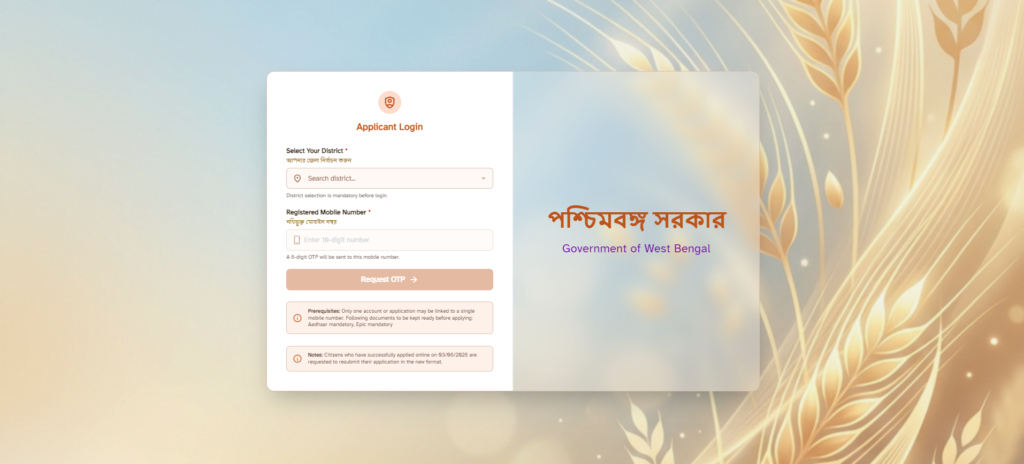
If you have applied for the Annapurna Yojana and are waiting for your first installment, there are several ways to verify your payment status. Checking your status regularly can also help you identify whether your application is still under verification, whether the payment has already been processed, or whether any issue needs your attention.
Important Links
| Service | Purpose | Official Link |
|---|---|---|
| Official Annapurna Yojana / Social Security Portal | Access scheme services, updates, login, and beneficiary-related information. | https://socialregistry.wb.gov.in |
| Application / Payment Status | Check your application and payment status (when the facility is available on the official portal). | https://socialregistry.wb.gov.in |
| Aadhaar Official Website | Update Aadhaar details, download Aadhaar, or access Aadhaar-related services. | https://uidai.gov.in |
| myAadhaar Portal | Login to manage Aadhaar services online. | https://myaadhaar.uidai.gov.in |
| DBT (Direct Benefit Transfer) Portal | Learn about the DBT system and government payment mechanism. | https://dbtbharat.gov.in |
| NPCI – Aadhaar Mapper Information | Information related to Aadhaar-enabled payment systems and NPCI services. | https://www.npci.org.in |
| National Cyber Crime Portal | Report online fraud, fake websites, or cyber scams related to government schemes. | https://cybercrime.gov.in |
| Cyber Crime Helpline | Report cyber fraud immediately. | 1930 |
| Government of West Bengal | Official government website for notifications and announcements. | https://wb.gov.in |
Method 1: Check Your Bank Account
The quickest and most reliable way to know whether the installment has been received is by checking your bank account.
You can verify your account using any of the following methods:
- Mobile Banking App
- Internet Banking
- ATM Mini Statement
- Updated Bank Passbook
- SMS Alerts from Your Bank
- UPI applications that display account transactions
If the payment has been successfully transferred, it will appear in your recent transaction history. In some cases, the transaction description may mention terms such as DBT, Government Benefit, or a similar payment reference, depending on your bank.
Tip: If you do not receive SMS alerts from your bank, updating your passbook or checking your account through your bank’s mobile application can help you confirm whether the payment has been credited.
Method 2: Check Your Application Status
If the government provides an online status-check facility, beneficiaries can check the progress of their application using details such as:
- Application Number
- Registered Mobile Number
- Aadhaar Number (where permitted)
- Other details requested on the official portal
The status page generally shows the current stage of your application rather than just whether payment has been made.
Method 3: Visit Your Bank Branch
If your application appears to be approved but the amount has not reached your account, visiting your bank branch is often the fastest way to identify the problem.
Request the bank staff to check:
- Whether any DBT payment has been received.
- Whether the payment was rejected or returned.
- Whether your Aadhaar is linked with your account.
- Whether DBT is active.
- Whether your account is active and eligible to receive government benefits.
Many beneficiaries assume the government has not released the payment when, in reality, the transaction may have been rejected by the banking system.
Method 4: Contact the Concerned Help Centre
If both your application status and bank verification indicate a problem, you should contact the designated help centre or the local office responsible for the scheme.
Before visiting, keep these documents ready:
- Aadhaar Card
- Bank Passbook
- Application Receipt
- Registered Mobile Number
- Any acknowledgment or verification slip received during registration
Having these documents available can make it easier for officials to locate your application and resolve the issue.
Understanding Your Application Status
Many applicants become worried because they do not understand what the status shown on the portal actually means. Below are some common status messages and the action you should take.
| Application Status | What It Means | What You Should Do |
|---|---|---|
| Application Submitted | Your application has been received but has not yet been verified. | Wait for the verification process to begin. |
| Under Verification | Officials are checking your documents and eligibility. | No action is usually required unless additional documents are requested. |
| Document Verification Pending | Some documents are still being reviewed or require clarification. | Keep checking for updates and submit additional documents if requested. |
| Approved | Your application has successfully passed verification. | Wait for the payment to be processed if it has not already been credited. |
| Payment Processing | Your payment is being prepared for transfer. | Wait for the amount to appear in your bank account. |
| Payment Sent | The government has initiated the transfer to your bank. | Check your bank account or passbook. |
| Payment Credited | The installment has been successfully deposited. | No further action is required. |
| Payment Failed | The transaction could not be completed successfully. | Contact your bank and verify your account, Aadhaar linkage, and DBT status. |
| Application Rejected | Your application did not meet one or more eligibility or verification requirements. | Contact the concerned authority to understand the reason and whether correction or reapplication is allowed. |
How Long Does It Take for the Payment to Reach Your Bank Account?
Many beneficiaries expect the installment to arrive immediately after approval. However, the payment process involves multiple stages, including preparation of the beneficiary list, banking verification, and transaction processing.
In most cases, there may be a gap between application approval and the actual credit of funds to your account. This gap can vary depending on:
- Verification workload.
- Bank processing time.
- Batch-wise payment releases.
- Public holidays or weekends.
- Technical maintenance by the banking system.
If your application has recently been approved, it is generally advisable to allow some time before assuming that there is a problem.
My Neighbour Received the Payment, But I Didn’t. Why?
This is one of the most common concerns among beneficiaries.
Receiving the payment later than someone else does not necessarily mean that your application has been rejected. Every application is processed individually, and differences in verification, bank processing, or payment batches can result in different credit dates.
Possible reasons include:
- Your documents are still under verification.
- Your bank has not yet processed the DBT transaction.
- Aadhaar-bank linkage requires verification.
- Your payment has been scheduled for the next batch.
- There is a technical issue that needs to be resolved.
Unless your application status specifically shows Rejected, there is usually no need to panic.
Before You Assume the Payment Is Missing
Before visiting any office or filing a complaint, take a few minutes to complete this simple checklist:
✔ Check your bank account or passbook.
✔ Verify that your Aadhaar is linked with your bank account.
✔ Ensure your bank account is active.
✔ Confirm that DBT services are enabled.
✔ Check whether your application is still under verification.
✔ Make sure your registered mobile number is active so you do not miss important updates.
Completing these basic checks can often save you an unnecessary visit to the bank or government office.
Why Haven’t You Received the Annapurna Yojana First Installment? (Complete Problem & Solution Guide)
If the first installment has already been credited to other beneficiaries but you are still waiting, there is no need to panic immediately. A delayed payment does not always mean your application has been rejected. In many cases, the issue is temporary and can be resolved after completing a few verification steps.
Government welfare payments pass through several stages before reaching a beneficiary’s bank account. Your application must be verified, your bank account must be eligible to receive Direct Benefit Transfer (DBT) payments, and your Aadhaar details must match the records. If any of these checks fail, the payment may be delayed or rejected.
Below are the most common reasons why beneficiaries do not receive the first installment and the steps you can take to resolve each issue.
1. Your Application Is Still Under Verification
One of the most common reasons for a delayed payment is that the verification process has not yet been completed. Every application is checked to ensure that the applicant meets the eligibility criteria and that the information provided is correct.
How to Identify This Issue
- Your application status shows Under Verification or Pending Verification.
- You have not received any payment confirmation.
- No rejection message has been issued.
What You Should Do
- Wait for the verification process to be completed.
- Check your application status regularly.
- Keep your phone active in case officials contact you for additional information.
Good to Know: Verification may be completed in phases, so some applicants receive the payment earlier than others.
2. Aadhaar Is Not Linked with Your Bank Account
Most government benefit schemes use the Aadhaar-enabled DBT system to transfer payments. If your Aadhaar is not linked with your bank account, the payment may fail even if your application has been approved.
Signs of This Problem
- Your bank confirms that Aadhaar is not linked.
- Previous DBT benefits have also not been received.
- Your application is approved, but no payment is credited.
How to Fix It
Visit your bank branch and request Aadhaar seeding. Carry:
- Aadhaar Card
- Bank Passbook
- Registered Mobile Number
After the bank updates your records, future DBT payments can usually be processed successfully.
3. DBT Services Are Not Enabled
Some people assume that linking Aadhaar with a bank account is enough. However, your account must also be enabled to receive Direct Benefit Transfer payments.
How to Check
Ask your bank representative:
“Is my account enabled to receive DBT payments?”
Solution
If DBT is inactive, request the bank to activate it. This process may take a few working days, depending on the bank.
4. Incorrect Bank Account Details
Even a small mistake in the account number or IFSC code can prevent the payment from reaching your account.
Common Mistakes
- Wrong account number
- Incorrect IFSC code
- Closed bank account
- Dormant or inactive account
Solution
- Verify your bank details.
- Contact the concerned authority if corrections are permitted.
- Make sure the account provided during registration is still active.
5. Your Aadhaar Details Do Not Match the Application
If your name, date of birth, gender, or other personal information is different in your Aadhaar and your application, verification may fail.
Example
Your Aadhaar shows:
Sunita Devi
But your application says:
Sunita Kumari
Even a minor mismatch can sometimes delay verification.
Solution
Check both records carefully and update the incorrect information through the appropriate authority.
6. Your Bank Account Is Inactive or Frozen
Banks may classify an account as inactive if it has not been used for a long period. In some cases, accounts may also be frozen because of KYC issues or other banking requirements.
How to Check
Visit your bank branch and ask whether:
- Your account is active.
- There are any restrictions on transactions.
- KYC documents need to be updated.
Solution
Complete any pending KYC formalities and reactivate the account if required.
7. Documents Could Not Be Verified
Your application may remain pending if the submitted documents are incomplete, unclear, or inconsistent.
Possible Reasons
- Blurred document copies
- Missing pages
- Incorrect information
- Expired documents (where applicable)
Solution
If the authorities ask for additional documents or corrections, submit them as soon as possible to avoid further delays.
8. Payment Is Being Released in Different Phases
Not every beneficiary receives the installment on the same day. Government departments often release payments in multiple batches to manage verification and banking processes efficiently.
What This Means
Your neighbour may receive the payment today, while yours could be credited a few days later, even if both applications are approved.
Solution
Continue checking your bank account and application status. If there is no issue with your application, the payment may arrive in a later batch.
9. Technical Banking Delays
Sometimes the payment is successfully sent by the government but takes additional time to appear in the beneficiary’s account because of technical processing at the bank.
Possible Causes
- Heavy transaction volume
- Banking system maintenance
- Public holidays
- Temporary server issues
Solution
Wait for a short period and check your account again before assuming that the payment has failed.
10. Your Mobile Number Is Not Updated
Although an incorrect mobile number usually does not stop the payment itself, it can prevent you from receiving important SMS alerts about your application or bank transaction.
Solution
Keep your registered mobile number updated with both your bank and the scheme records whenever possible.
Quick Troubleshooting Table
| Problem | Possible Reason | What You Should Do |
|---|---|---|
| Application still pending | Verification not completed | Wait for verification and monitor your status. |
| Payment not credited | Aadhaar not linked with bank | Complete Aadhaar seeding at your bank. |
| Application approved but no money | DBT not enabled | Ask your bank to activate DBT services. |
| Payment failed | Incorrect bank details | Verify and correct your bank information. |
| Verification delayed | Aadhaar or personal details do not match | Update the incorrect records and ensure both details match. |
| No transaction received | Bank account inactive | Reactivate your account and complete pending KYC if required. |
| Documents rejected | Unclear or incomplete documents | Submit clear and valid documents if requested. |
| Others received payment first | Batch-wise payment processing | Wait for the next payment batch and keep checking your account. |
| Delay after payment release | Banking system processing | Allow some additional time and verify with your bank if needed. |
When Should You File a Complaint?
You should consider contacting the concerned authority if:
- Your application shows Approved, but you have not received the payment even after a reasonable processing period.
- Your bank confirms that there is no pending DBT transaction.
- Your Aadhaar is linked and DBT is active.
- Your account is active and all details are correct.
- The portal displays Payment Failed or another error message that has not been resolved.
Before visiting the help centre, carry your Aadhaar Card, bank passbook, application acknowledgment, and any communication related to your application. This will help officials investigate the issue more efficiently.
Disclaimer
The information provided in this article is intended for general informational and educational purposes only. While we make every effort to ensure that the content is accurate and up to date, government schemes, eligibility criteria, application procedures, payment schedules, and benefit amounts may be revised or updated by the concerned authorities from time to time.
Also See
West Bengal Samarth Portal 2026
West Bengal Medhashree Scholarship Scheme 2026