West Bengal Annapurna Yojana 2026: ₹3,000 Monthly Financial Assistance for Women – Eligibility, Benefits, Application Process & Latest Updates
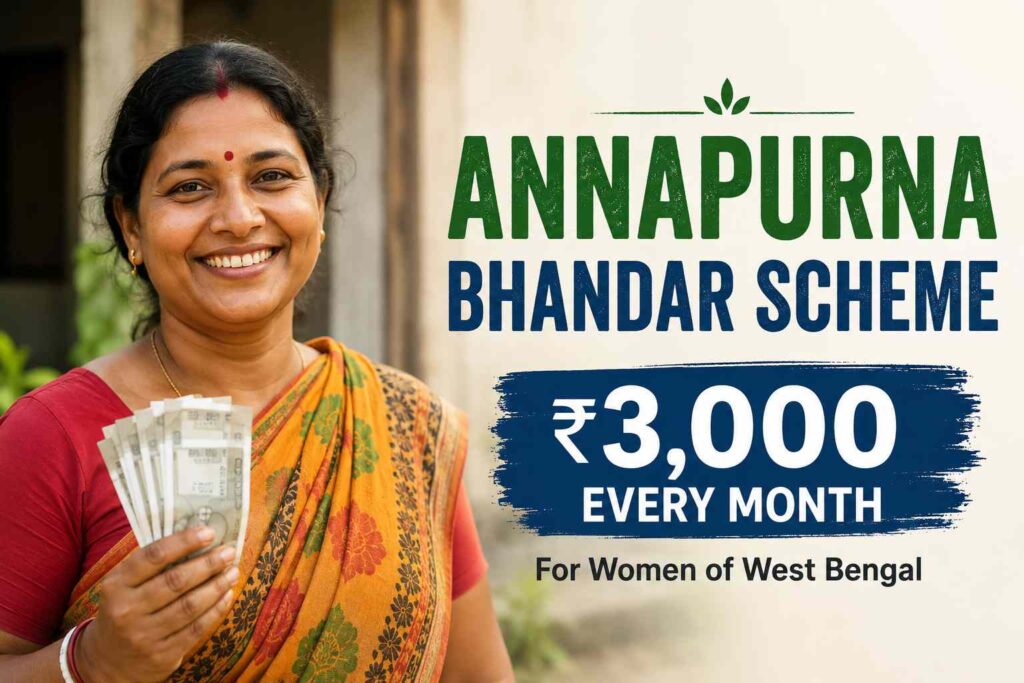
West Bengal Annapurna Yojana 2026
The Government of West Bengal has introduced the Annapurna Yojana, a major financial assistance scheme aimed at strengthening the economic security of women across the state. Under this scheme, eligible women can receive ₹3,000 per month directly in their Aadhaar-linked bank accounts through the Direct Benefit Transfer (DBT) system.
The scheme has attracted significant public attention because it offers a substantially higher monthly benefit compared to many existing state welfare programs. The government has also introduced a dedicated online portal to facilitate beneficiary registration, verification, and future service delivery.
This guide explains everything you need to know about the scheme, including eligibility criteria, benefits, documents required, application process, DBT rules, beneficiary verification, and frequently asked questions.
Annapurna Yojana 2026 – Overview
| Particulars | Details |
|---|---|
| Scheme Name | Annapurna Yojana |
| State | West Bengal |
| Launch Year | 2026 |
| Benefit Amount | ₹3,000 per month |
| Beneficiaries | Eligible women residents of West Bengal |
| Transfer Mode | Direct Benefit Transfer (DBT) |
| Age Limit | 25 to 60 years |
| Department | Women & Child Development and Social Welfare Department |
| Application Mode | Online and Offline |
| Official Portal | socialregistry.wb.gov.in |
What is Annapurna Yojana?
Annapurna Yojana is a women-focused financial assistance program launched by the West Bengal Government to provide regular monthly financial support to eligible women.
The primary objective of the scheme is to improve household financial stability and increase the economic independence of women. The assistance can help beneficiaries manage:
- Household expenses
- Grocery purchases
- Children’s education
- Healthcare costs
- Utility bills
- Daily living expenses
- Emergency family requirements
The scheme is designed to ensure that financial support reaches beneficiaries directly through a transparent DBT mechanism.
Latest Updates
Recent government notifications and reports indicate that the Annapurna Yojana became operational from June 2026, with financial assistance being transferred directly to verified beneficiaries. Existing eligible beneficiaries from the earlier Lakshmir Bhandar system are being migrated after verification and database validation.
Key updates include:
- Monthly assistance fixed at ₹3,000.
- Aadhaar-linked bank accounts are mandatory for DBT.
- Dedicated registration and verification portal introduced.
- Verification drives conducted to remove duplicate and ineligible records.
- New applicants can register through prescribed channels.
Benefits of Annapurna Yojana
1. Monthly Financial Support
Eligible women receive ₹3,000 every month, helping them manage essential household expenses.
2. Direct Bank Transfer
Funds are transferred directly into the beneficiary’s Aadhaar-linked bank account, reducing delays and middlemen.
3. Women’s Financial Empowerment
Regular financial support can improve women’s decision-making capacity and economic independence.
4. Improved Financial Inclusion
The scheme encourages beneficiaries to maintain active bank accounts and participate in the formal financial system.
5. Household Security
The assistance may help families meet routine expenses such as food, education, healthcare, and utility bills.
Eligibility Criteria
Applicants should carefully review the eligibility requirements before submitting an application.
A woman may be eligible if she:
- Is a permanent resident of West Bengal.
- Is between 25 and 60 years of age.
- Possesses a valid Aadhaar card.
- Has an active Aadhaar-linked bank account.
- Meets the prescribed verification requirements.
Who May Not Be Eligible?
Applicants may be excluded if they:
- Are below 25 years or above 60 years.
- Are permanent government employees.
- Receive a regular government salary.
- Receive a government pension (subject to applicable rules).
- Are income taxpayers.
- Provide incorrect information during verification.
- Are found ineligible during government scrutiny.
Applicants should always refer to the latest government guidelines for final eligibility determination.
Documents Required
While document requirements may vary depending on the application channel, applicants should generally keep the following ready:
| Document | Purpose |
|---|---|
| Aadhaar Card | Identity verification |
| Residence Proof | Residency confirmation |
| Voter ID | Identity and address verification |
| Bank Passbook | DBT payment verification |
| Passport Photograph | Application record |
| Mobile Number | OTP verification and communication |
| Income Documents (if required) | Eligibility assessment |
How to Apply Online for Annapurna Yojana
Eligible women can register online through the official Annapurna Yojana portal.
Step-by-Step Process
Step 1
Visit the official Annapurna portal.
Step 2
Choose the citizen registration option.
Step 3
Select your district.
Step 4
Enter your mobile number.
Step 5
Complete OTP verification.
Step 6
Fill in all required information, including:
- Personal details
- Address details
- Family details
- Aadhaar information
- Bank account information
- Ration card information
- Income information
Step 7
Review all entered information carefully.
Step 8
Submit the application.
Step 9
Save the application reference number for future tracking.
Offline Application Process
Applicants who prefer offline registration can submit their applications through designated government offices.
Applications may be accepted through:
- BDO Offices
- SDO Offices
- Municipality Offices
- Ward Offices
- Gram Panchayat Offices
- Special Registration Camps
Applicants should attach all required documents and keep the acknowledgement receipt safely.
Understanding the Verification Process
Verification plays an important role in ensuring that benefits reach eligible women.
Officials may verify:
- Aadhaar details
- Bank account information
- Residence status
- Identity records
- Family information
- Eligibility conditions
Applications containing incorrect or incomplete information may face delays or rejection.
DBT Payment System Explained
The Annapurna Yojana uses the Direct Benefit Transfer (DBT) mechanism.
Why Aadhaar Linking Matters
For successful payment processing:
- Aadhaar should be linked with the bank account.
- The bank account should remain active.
- Mobile number should remain updated.
- NPCI mapping should be correct.
Failure in any of these areas can result in payment delays.
Common Reasons for Payment Failure
Many beneficiaries face DBT issues because of:
- Incorrect Aadhaar number
- Inactive bank account
- Aadhaar not linked with the bank account
- Incorrect NPCI mapping
- Name mismatch between Aadhaar and bank records
- Verification pending
Beneficiaries should regularly verify their banking and Aadhaar details.
How to Track Application Status
Applicants can monitor their application progress online.
General Process
- Visit the official portal.
- Open the application status section.
- Enter the application number or registered mobile number.
- Complete OTP verification.
- View status details.
Possible status messages include:
- Submitted
- Under Verification
- Approved
- Rejected
- Payment Processed
How to Check Payment Status
Beneficiaries may also track DBT payments online.
Information that may be required:
- Aadhaar Number
- Application Number
- Registered Mobile Number
Payment status can help beneficiaries confirm whether funds have been successfully credited.
Important Tips for Applicants
To avoid delays:
- Use only official government portals.
- Ensure Aadhaar details are correct.
- Keep the bank account active.
- Submit genuine documents.
- Regularly check application status.
- Respond promptly to verification requests.
Annapurna Yojana vs Lakshmir Bhandar
| Feature | Annapurna Yojana | Lakshmir Bhandar |
|---|---|---|
| Monthly Assistance | ₹3,000 | Lower assistance amount |
| Payment Method | DBT | DBT |
| Target Group | Eligible women | Eligible women |
| Aadhaar-linked Account | Required | Required |
| Verification Process | Enhanced verification | Existing framework |
Applicants should rely on official notifications for final implementation details and transition rules.
Frequently Asked Questions (FAQs)
What is the monthly benefit under Annapurna Yojana?
Eligible beneficiaries may receive ₹3,000 per month through DBT.
Who can apply?
Eligible women residents of West Bengal aged between 25 and 60 years.
Is Aadhaar mandatory?
Yes, Aadhaar is generally required for identity verification and DBT payments.
Can I apply online?
Yes, eligible applicants can register through the designated government portal.
Is a bank account required?
Yes. The bank account should be linked with Aadhaar for smooth DBT transfers.
Can government employees apply?
Generally, permanent government employees are not eligible.
How will the money be transferred?
Funds are transferred directly into Aadhaar-linked bank accounts through DBT.
What happens if my application is rejected?
Applicants may need to correct deficiencies or follow instructions provided by the concerned authorities.
Conclusion
The West Bengal Annapurna Yojana 2026 is one of the state’s most significant women-focused welfare initiatives. By providing ₹3,000 per month through direct bank transfers, the scheme aims to strengthen financial security, encourage financial inclusion, and support economically vulnerable households.
Women who meet the eligibility conditions should keep their Aadhaar and bank account information updated, complete registration carefully, and regularly monitor their application and payment status through official channels.
Disclaimer: Scheme guidelines, eligibility rules, registration procedures, and verification requirements may change through future government notifications. Applicants should always verify the latest information from official government sources before submitting applications.
Pingback: West Bengal Yuva Shakti Yojana 2026: Registration, Eligibility, Benefits, Portal, Documents & Latest Updates - Citizen's Benefit
Pingback: West Bengal Samarth Portal 2026: Login, Pension Status, Services, Covered Schemes & Complete Guide - Citizen's Benefit